
Australia has no single national e-bike law. Each state and territory writes its own road rules, but they all converge on the same idea, borrowed from the European product standard EN 15194. Get the two headline numbers right and you are legal almost everywhere: 250 watts of continuous motor power, and motor assistance that cuts out at 25 km/h. This guide explains what that means, then covers the wrinkles state by state.
What makes an e-bike road-legal in Australia
Two categories of electric bicycle are recognised across the country. The main one is the EN 15194 pedelec (sometimes written EPAC): a motor rated up to 250W continuous, that only assists while you are pedalling, and that stops assisting once you reach 25 km/h. You can still pedal faster than 25 km/h under your own legs, the motor just stops helping. The second, older category is a power-assisted pedal cycle capped at 200W. Most states now describe this lower-power class as still requiring you to pedal to move.
The one rule that is genuinely the same everywhere concerns the throttle. A throttle that moves the bike without pedalling is only legal up to about 6 km/h, the walking-pace mode used to ease away from a stop or nudge the bike up a kerb. A throttle that can drive the bike faster than that without pedalling is not legal anywhere in Australia, whatever the wattage.
Why moped-style and unlockable e-bikes are illegal, not a grey area
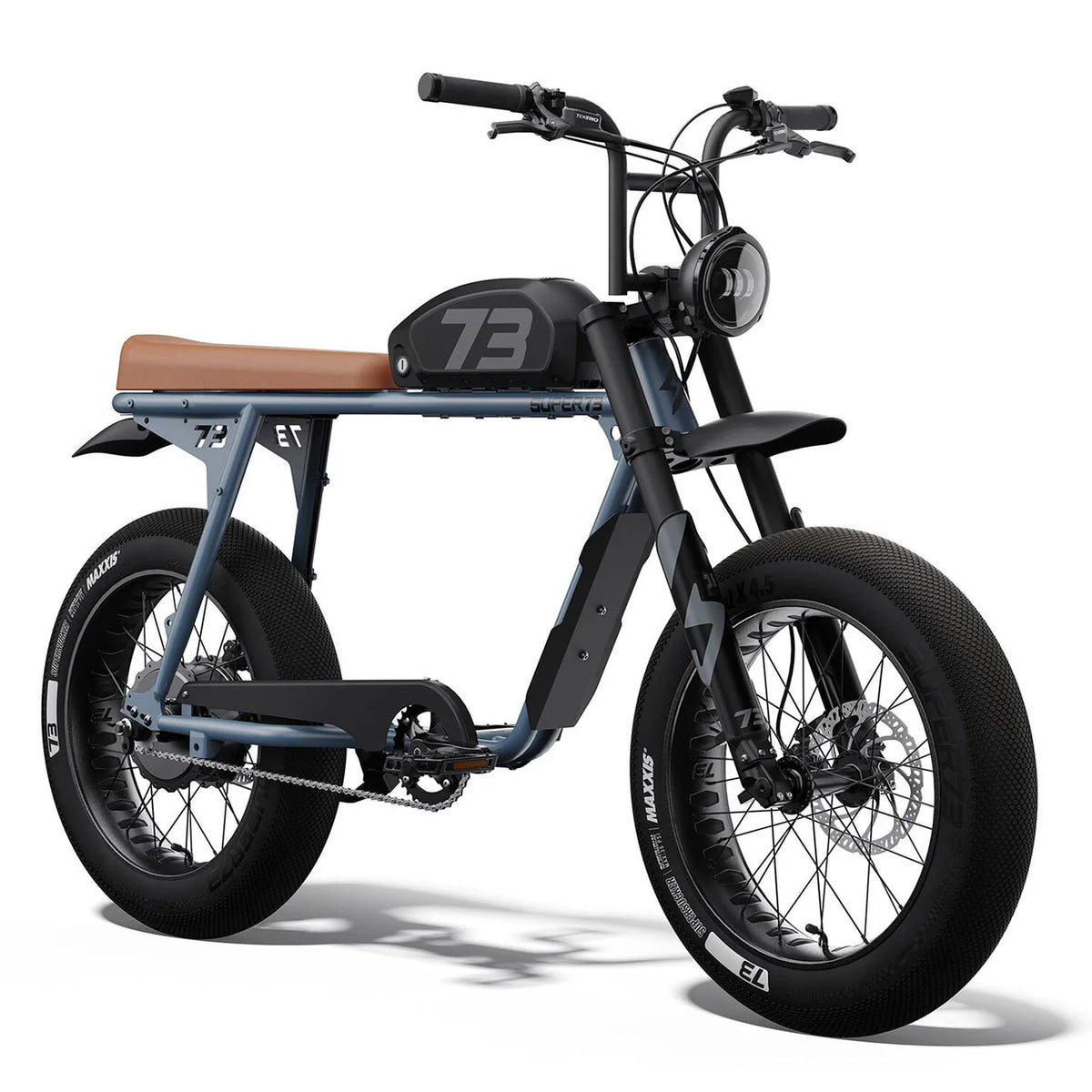
The fast-growing category of throttle-controlled, moped-styled machines (600 to 1,000-plus watts, 40 to 50 km/h) look like bicycles but function as electric motorcycles. Every state treats them as motor vehicles that need registration, insurance and a licence. In practice they cannot meet the vehicle safety standards required for registration, so they simply cannot be ridden legally on any road or path, only on private property.
Being able to lock or app-limit a high-power bike does not make it legal. NSW, Victoria and Queensland all state, in almost identical language, that a bike with the hardware capacity to exceed the wattage or throttle limit is illegal even while restricted by software, a switch or a firmware setting. If it can be unlocked to run faster or throttle-only, it is treated as an unregistered motor vehicle the moment it touches a public road or path.
New South Wales
NSW currently allows up to 500W of continuous power, a wider allowance than the national norm, with the throttle still capped at 6 km/h. That is temporary: from 1 March 2029, NSW drops to 250W and will require full EN 15194 certification. Helmets are mandatory. From 21 August 2026, police and authorised officers have expanded powers to seize and dispose of illegal e-bikes used on roads.
Victoria
Victoria recognises the 250W EN 15194 pedelec (assist cutting out at 25 km/h, throttle limited to 6 km/h walk mode) and a 200W power-assisted cycle that must be ridden with pedalling. Helmets are mandatory. A non-compliant e-bike is an unregistered motor vehicle and fines of over $1,000 apply for riding one on public roads, paths or footpaths. Converted e-bikes are banned from trains and ticketed transport areas over battery fire risk.
Queensland
Queensland now runs the strictest rules in the country. A legal e-bike must be 250W, assist to 25 km/h only, keep the throttle to 6 km/h, and meet EN 15194 with a compliance label. Throttle-only bikes are listed as illegal. From 31 August 2026, riders must be at least 16 and hold at least a learner licence (with exemptions for supervised younger riders, designated recreational trails, and a medical process). Footpath riding is capped at 12 km/h. Police can seize and destroy illegal devices, and parents can be fined for letting a child ride one.
South Australia
South Australia recognises a 200W power-assisted pedal cycle (which must be pedalled to move, under 50kg, with an adjustable seat) and a 250W EPAC that reduces power above 6 km/h and cuts out at 25 km/h. Helmets are mandatory, along with a bell, a rear reflector and lights at night. A review of e-bike and personal mobility device rules is underway but no change is in force yet.
Western Australia
WA recognises a 250W EN 15194 pedelec and a separate 200W power-assisted cycle that does not have to meet EN 15194. WA is one of only two jurisdictions with a hard minimum age: no one under 16 may ride an e-bike with the power assistance engaged. Helmets are mandatory. A non-compliant e-bike is treated as an unlicensed motor vehicle, can be seized, and carries a $500 fine.
Tasmania
Tasmania recognises a 200W pedal-primary bike and a 250W EPAC that cuts out at 25 km/h. Compliant e-bikes need no registration or licence and follow the normal bicycle road rules, including the mandatory helmet law. A current Bill before Parliament targets petrol-powered bicycles and explicitly does not change the e-bike rules; a separate e-bike regulations review is running.
Australian Capital Territory
The ACT recognises a 200W power-assisted pedal cycle that must be pedalled to move at any speed (under 50kg, adjustable seat) and a 250W EPAC with the usual 25 km/h cut-off and 6 km/h walk mode. Notably, genuine throttle-only riding is not legal in the ACT even in the lower-power class. Helmets are mandatory. Petrol pocket bikes and minibikes are banned from all ACT roads and road-related areas.
Northern Territory
The NT recognises a 250W EN 15194 pedelec (25 km/h) and a 200W power-assisted bicycle, both treated as bicycles under the Australian Road Rules as modified locally. The NT's general bicycle helmet law applies. Note the NT also has a separate motorised scooter class (200W, 10 km/h), which is a different device and not an e-bike.
What happens if police seize your e-bike
Only NSW and Queensland have laws written for e-bikes that let police seize an illegal bike on the spot and destroy it without a court order. In NSW (enforceable since 21 August 2026) an owner gets 14 days to apply for its return, and only on narrow innocent owner grounds; the first 23 seized bikes were crushed on 1 October 2026. In Queensland (since 1 July 2026) the owner has 30 days to apply for release on limited grounds before the bike is forfeited and destroyed. Victoria, WA, SA, Tasmania, the ACT and the NT use general unregistered or unlicensed vehicle powers instead, which in SA means a 28 day impound costing about $1,332. Our seized e-bike guide at ebikefinder.au/ebike-laws/seized has the full process for every state.
The penalties for getting it wrong
Once an e-bike exceeds the wattage or throttle limits, it stops being a bicycle and becomes an unregistered, uninsured motor vehicle. Fines vary by state, from $500 in WA to over $1,000 in Victoria and, in Queensland, up to several thousand dollars for the most serious offences. NSW (from 21 August 2026) and Queensland (from 1 July 2026) can now seize and destroy illegal e-bikes, and Queensland can fine a parent for a child riding one. Because these high-power machines cannot meet the standards for registration, there is usually no way to make them road-legal at all.
Rules change, and the 2025 to 2026 period has seen more change than any before it. Always confirm the current position with your state's transport authority before you buy, especially on minimum age and any local path bans. The state sources this guide draws on are listed below.